


Floor Drying
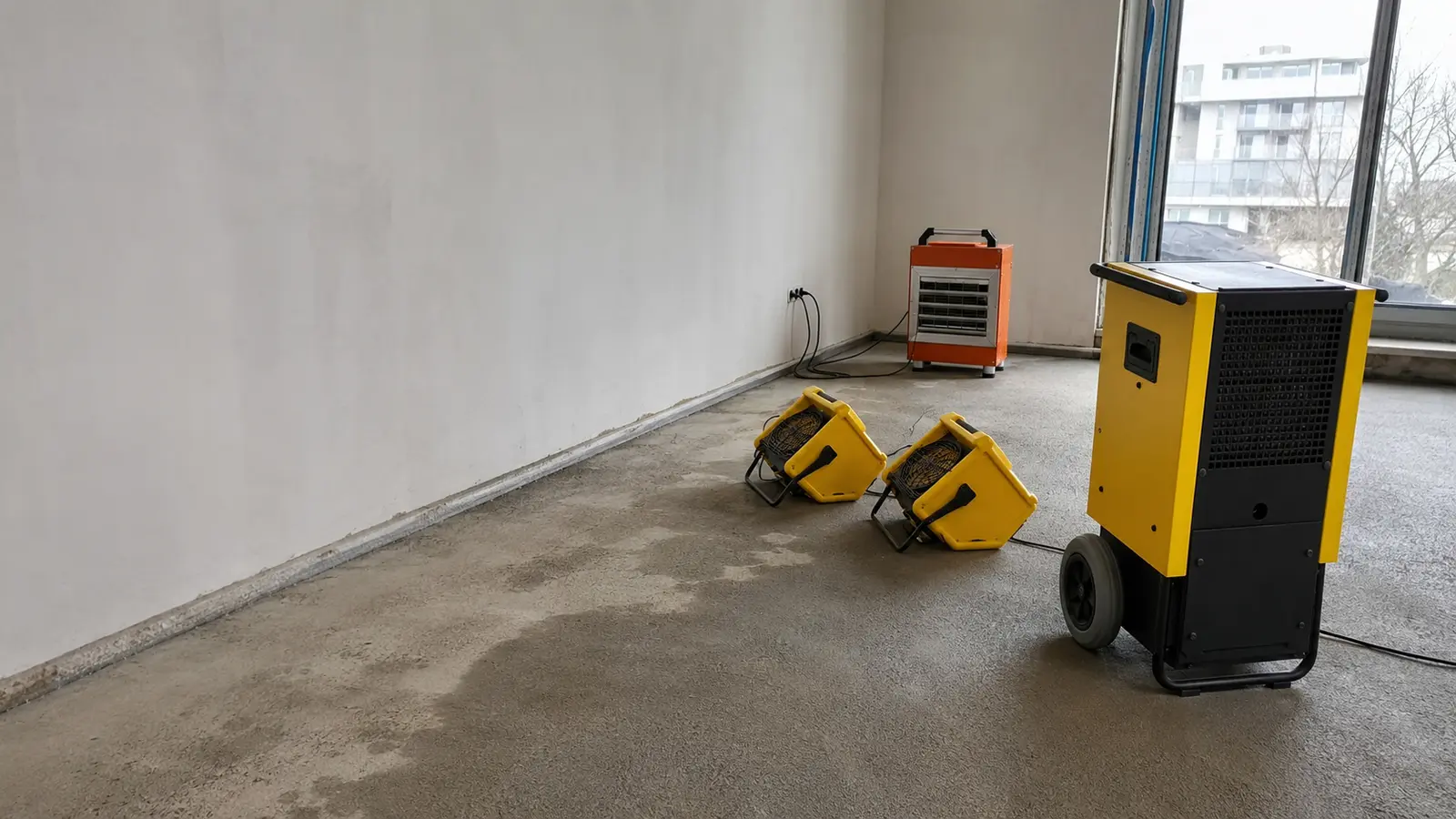
After a flood, plumbing leak, renovation or new construction, a floor may look dry while moisture remains in the layers below. If parquet, epoxy, PVC or another covering is installed before this moisture is assessed, the risk of poor adhesion, swelling, odour and surface damage can increase. Nemeks plans floor drying according to the moisture source, floor structure and actual site conditions.
Any active water entry must be stopped before drying begins. The affected area, floor layers, indoor temperature, air movement and electrical infrastructure are then reviewed together. The aim is not to make the surface appear temporarily dry, but to reduce excess moisture remaining inside the structure in a controlled way.
Why Do Floors Remain Damp for a Long Time?
Porous materials such as concrete and screed can absorb water into their structure. Removing free water from the surface does not mean that the moisture inside the material has disappeared. It can continue moving into the room air over time. Floor coverings, skirting boards and insulation layers can limit air movement and make this process slower.
Moisture should not be assumed to exist only at the visible point of damage. Water can travel through joints, below coverings or into adjacent areas. The spread of the affected area and the condition of the water source are therefore considered before equipment is placed.
Does Ventilation Replace Professional Floor Drying?
Opening doors and windows can support evaporation in suitable weather, but it may not remove moisture retained below a covering or inside the material. When outdoor air is humid, uncontrolled ventilation can also change the drying conditions inside the building.
In a professional floor drying application, air movement, dehumidification and controlled heat support are considered together. The objective is to collect the moisture released from the floor and create balanced air circulation throughout the affected area.
When Is Floor Drying Needed?
The need for floor drying is not limited to visible flooding. The condition of the floor and lower layers should be checked after a plumbing leak, before covering a new concrete or screed floor, when moisture signs appear below parquet, PVC or epoxy, after old flooring is removed during renovation, and in basements, storage areas or ground floors with recurring dampness.
How Is Professional Floor Drying Carried Out?
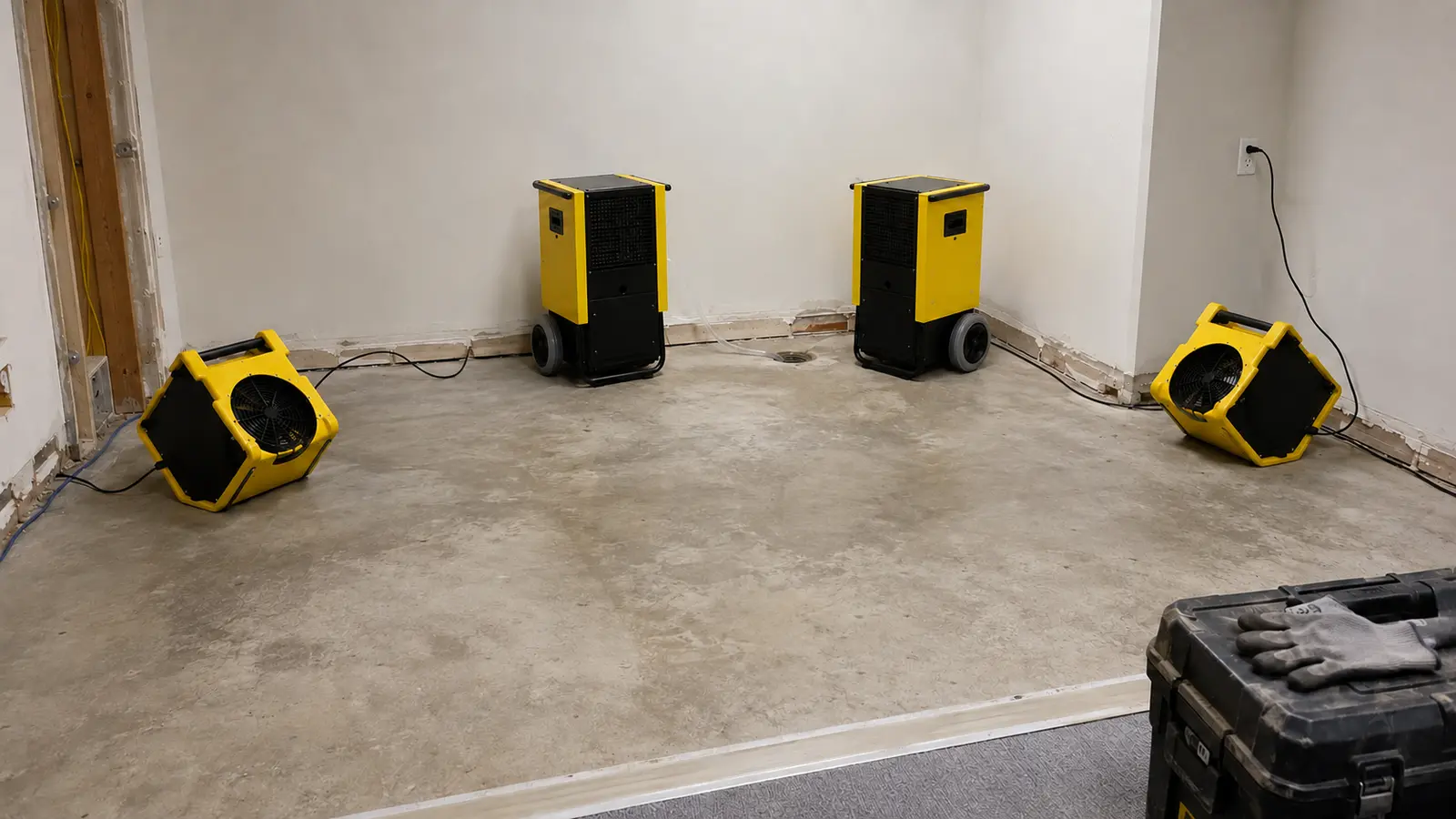
During the initial assessment, the direction of the water, affected surfaces and accessible floor layers are reviewed. Industrial dehumidifiers and air movers are positioned according to the room volume and moisture load. If the conditions require it, controlled heat support can be used without exposing the surface to excessive temperature.
Air inlets remain clear and the equipment working area is kept safe during the process. The duration depends on the amount of water, material structure, floor covering and indoor conditions. A fixed number of days should not be promised before measurements are taken.
How Do Dehumidifiers and Air Movers Work Together?
Air movers disturb stagnant air around the floor and support the transfer of moisture from the material into the air. The dehumidifier collects the excess water vapour carried by that air. Capacity is selected by considering room volume, ceiling height, openings, temperature and material moisture load rather than square metres alone.
Why Is Moisture Control Important Before Flooring?
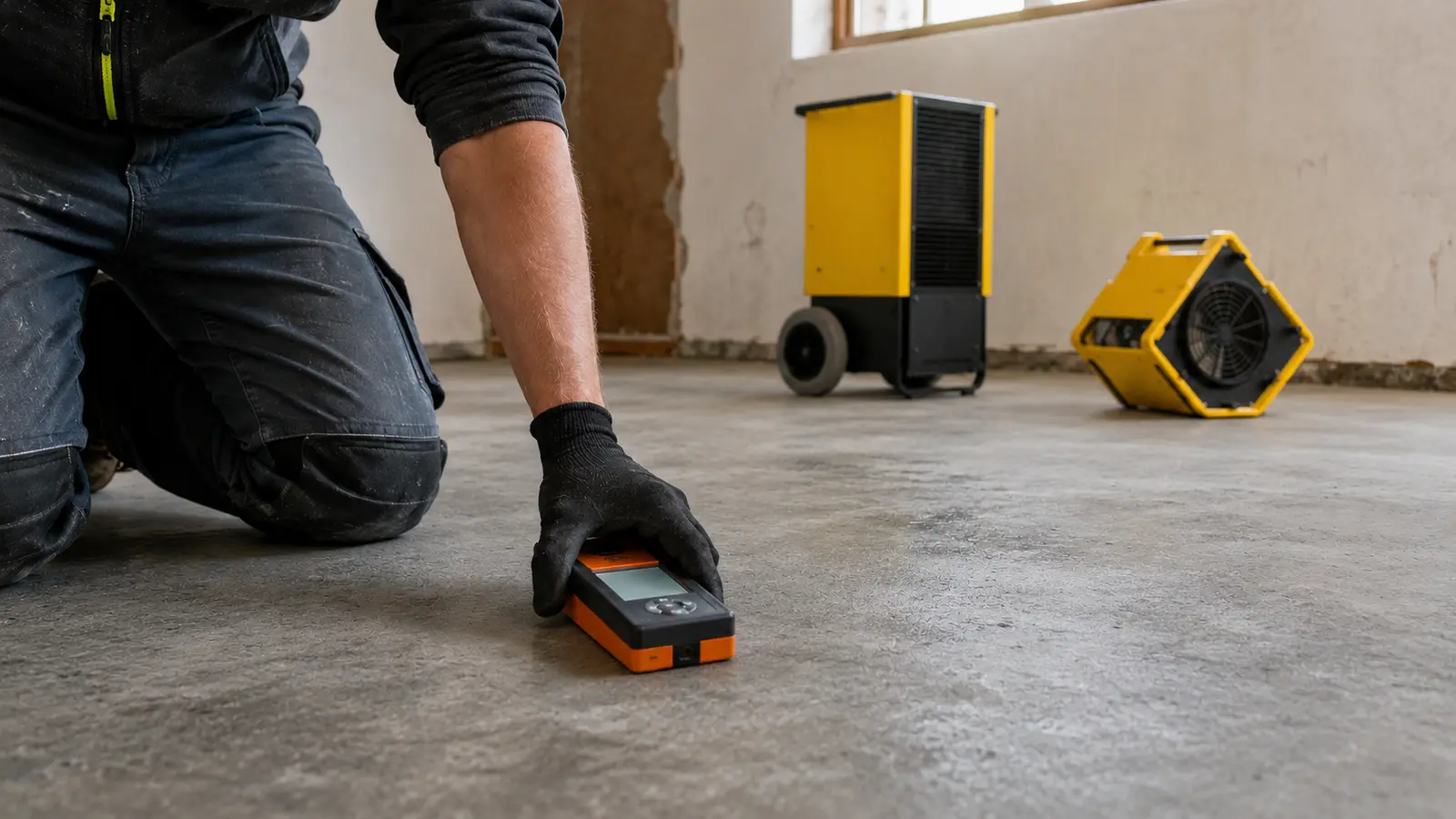
A lighter surface colour or a dry touch does not prove that the lower layers are ready for a covering. Parquet, epoxy, PVC and adhesive systems have different moisture requirements. Results after floor drying should therefore be considered together with the technical requirements of the planned finish.
Nemeks creates measured equipment layouts for homes, stores, warehouses, offices, factories and renovation sites. To discuss the condition of your floor and the appropriate drying approach, contact Nemeks on 0541 675 81 03.
Floor Drying Frequently Asked Questions
Is ventilation alone enough to dry a floor?
Ventilation can support evaporation in suitable weather, but it may not remove moisture retained below a floor covering or inside concrete and screed. Professional drying equipment may be required.
How long does floor drying take?
The duration depends on the material, starting moisture level, affected area, floor covering and indoor conditions. A fixed number of days should not be given without an assessment.
Which equipment is used for floor drying?
Depending on the site, industrial dehumidifiers, air movers and controlled heat support can be used together. Capacity and placement are planned according to the actual moisture load.
Can a new floor covering be installed when the surface looks dry?
Surface appearance alone is not enough. The floor moisture condition should be checked and compared with the technical requirements of the parquet, epoxy, PVC, tile or adhesive system.
Can floor drying start while a leak is still active?
A lasting drying plan requires the active water source to be stopped first. Once the source is controlled, the moisture remaining in the structure can be reduced in a controlled way.
Floor Drying Information & Offer Form
Referanslar
-
Danone
Isıtıcı ve Nem Alma Cihazı Kiralama
Isıtıcı KiralamaNem Alma Cihazı Kiralama Gıda & Perakende -
Seba İnşaat
Isıtıcı ve Nem Alma Cihazı Kiralama
Isıtıcı KiralamaNem Alma Cihazı Kiralama İnşaat & Mimarlık -
Kalyon Holding
Isıtıcı ve Nem Alma Cihazı Kiralama
Isıtıcı KiralamaNem Alma Cihazı Kiralama İnşaat & Mimarlık -
YDA İnşaat
Isıtıcı ve Nem Alma Cihazı Kiralama
Isıtıcı KiralamaNem Alma Cihazı Kiralama İnşaat & Mimarlık -
Beymen
Su Hasarı Sonrası Kurutma ve Ozonla Dezenfeksiyon
Su Hasarı KurutmaOzonla Dezenfeksiyon Moda & Perakende -
Ateş Mimarlık
Su Hasarı Sonrası Kurutma ve Ozonla Dezenfeksiyon
Su Hasarı KurutmaOzonla Dezenfeksiyon İnşaat & Mimarlık -
Tavuk Dünyası
Isıtıcı Kiralama
Isıtıcı Kiralama Gıda & Perakende -
Acarkent
Nem Alma Cihazı Kiralama
Nem Alma Cihazı Kiralama İnşaat & Mimarlık -
Büyükyalı
Isıtıcı ve Nem Alma Cihazı Kiralama
Isıtıcı KiralamaNem Alma Cihazı Kiralama İnşaat & Mimarlık -
AMAC Aerospace
Isıtıcı Kiralama
Isıtıcı Kiralama Savunma & Havacılık -
Avrupa Konutları
Isıtıcı ve Nem Alma Cihazı Kiralama
Isıtıcı KiralamaNem Alma Cihazı Kiralama İnşaat & Mimarlık -
Abdiibrahim
Isıtıcı ve Nem Alma Cihazı Kiralama
Isıtıcı KiralamaNem Alma Cihazı Kiralama Sağlık -
Ağaoğlu
Isıtıcı ve Nem Alma Cihazı Kiralama
Isıtıcı KiralamaNem Alma Cihazı Kiralama İnşaat & Mimarlık -
Alkev Özel Okulları
Ozonla Koku Giderme
Koku GidermeOzonla Dezenfeksiyon Eğitim & Kurumsal -
FineFood
Ozonla Dezenfeksiyon
Ozonla Dezenfeksiyon Gıda & Perakende -
Erlau Metal
Isıtıcı ve Nem Alma Cihazı Kiralama
Isıtıcı KiralamaNem Alma Cihazı Kiralama Sanayi & Lojistik -
Kale Projelendirme
Isıtıcı Satışı
Isıtıcı Satışı İnşaat & Mimarlık -
Kardeşeli Derneği
Su Hasarı Sonrası Kurutma ve Ozonla Dezenfeksiyon
Su Hasarı KurutmaOzonla Dezenfeksiyon Eğitim & Kurumsal -
Penti
Yangın Sonrası Koku Giderme
Koku Giderme Moda & Perakende -
Metreküp Mimarlık
Isıtıcı ve Nem Alma Cihazı Kiralama
Isıtıcı KiralamaNem Alma Cihazı Kiralama İnşaat & Mimarlık -
AL-KA İnşaat
Isıtıcı ve Nem Alma Cihazı Kiralama
Isıtıcı KiralamaNem Alma Cihazı Kiralama İnşaat & Mimarlık -
Armada Gıda
Ozonla Dezenfeksiyon
Ozonla Dezenfeksiyon Gıda & Perakende -
Ankas Mühendislik
Isıtıcı ve Nem Alma Cihazı Kiralama
Isıtıcı KiralamaNem Alma Cihazı Kiralama İnşaat & Mimarlık -
Akrotes Mimarlık
Isıtıcı ve Nem Alma Cihazı Kiralama
Isıtıcı KiralamaNem Alma Cihazı Kiralama İnşaat & Mimarlık -
Coil Partners
Isıtıcı Kiralama
Isıtıcı Kiralama Sanayi & Lojistik -
Gürsan Lojistik
Isıtıcı ve Nem Alma Cihazı Kiralama
Isıtıcı KiralamaNem Alma Cihazı Kiralama Sanayi & Lojistik -
Snop Metal
Isıtıcı Kiralama
Isıtıcı Kiralama Sanayi & Lojistik -
Dpi Mimarlık
Isıtıcı ve Nem Alma Cihazı Kiralama
Isıtıcı KiralamaNem Alma Cihazı Kiralama İnşaat & Mimarlık -
Invest Eba İnşaat
Isıtıcı Satışı
Isıtıcı Satışı İnşaat & Mimarlık -
Esis İnşaat
Isıtıcı Kiralama
Isıtıcı Kiralama İnşaat & Mimarlık -
Doğrulsal Mühendislik
Isıtıcı ve Nem Alma Cihazı Kiralama
Isıtıcı KiralamaNem Alma Cihazı Kiralama İnşaat & Mimarlık -
Aselsan
Isıtıcı ve Nem Alma Cihazı Kiralama
Isıtıcı KiralamaNem Alma Cihazı Kiralama Savunma & Havacılık -
Doğu Denim
Isıtıcı Satışı
Isıtıcı Satışı Sanayi & Lojistik -
Daviva Diyaliz
Isıtıcı ve Nem Alma Cihazı Kiralama
Isıtıcı KiralamaNem Alma Cihazı Kiralama Sağlık -
Boğazköy Mimarlık
Isıtıcı ve Nem Alma Cihazı Kiralama
Isıtıcı KiralamaNem Alma Cihazı Kiralama İnşaat & Mimarlık -
GYM İnşaat
Isıtıcı ve Nem Alma Cihazı Kiralama
Isıtıcı KiralamaNem Alma Cihazı Kiralama İnşaat & Mimarlık -
Gümüştaş Madencilik
Isıtıcı Satış ve Isıtıcı Kiralama
Isıtıcı SatışıIsıtıcı Kiralama Sanayi & Lojistik -
Gürsoy Grup
Isıtıcı ve Nem Alma Cihazı Kiralama
Isıtıcı KiralamaNem Alma Cihazı Kiralama İnşaat & Mimarlık -
Mr Grup
Isıtıcı ve Nem Alma Cihazı Kiralama
Isıtıcı KiralamaNem Alma Cihazı Kiralama İnşaat & Mimarlık -
Tekyol İnşaat
Isıtıcı Kiralama
Isıtıcı Kiralama İnşaat & Mimarlık -
Genyap Mimarlık
Isıtıcı Kiralama
Isıtıcı Kiralama İnşaat & Mimarlık -
Ertuna Aksoy Mimarlık
Isıtıcı ve Nem Alma Cihazı Kiralama
Isıtıcı KiralamaNem Alma Cihazı Kiralama İnşaat & Mimarlık